

Which Spiritual Growth Tools Actually Work for Single Women?
Last Updated: November 12, 2026
Quick Summary
Spiritual growth tools for single women are structured resources, practices, and guided journals that help you pursue faith intentionally during a season without a partner. They work best when matched to your actual season and schedule, not an aspirational one, and when they name real struggles like loneliness and comparison instead of treating singleness as a waiting room.
- Guided journals hand you the structure, which removes the blank-page hesitation that stops many people.
- Our Abide study method reads the passage in context, compares translations, and applies one prompt to your week.
- Start with five honest minutes of prayer over thirty polished ones, since God is not grading your consistency.
- Match your tool to your real schedule: chaotic mornings call for a 10-minute devotional plus one prompt.
- Skip any resource that positions itself as a replacement for therapy or professional care.
Table of Contents
- Why Spiritual Growth Tools Matter in a Single Season
- Christian Journaling Prompts for Personal Growth
- Bible Study for Single Women: Going Deeper Than a Daily Reading
- Devotionals for Single Women That Address the Real Questions
- Prayer Practices for Women Who Feel Stuck
- How to Build a Daily Rhythm With Your Spiritual Growth Tools
- What to Ignore When Choosing Spiritual Growth Tools
- Choosing the Right Journal for Your Season
- Frequently Asked Questions
Why Spiritual Growth Tools Matter in a Single Season
Spiritual growth tools for single women are structured resources, practices, and guided journals that help you pursue faith intentionally during a season without a partner. They matter because singleness carries specific pressures that generic devotionals rarely address: loneliness, comparison, unanswered questions about the future, and the quiet work of building an identity that is not defined by relationship status.
Guided journals are built for exactly these seasons, because what matters most is what helps women keep going rather than start strong and quit by day four. The research is sobering on that front. A review published in Religions journal analysis of spiritual growth research notes that no single tool captures the full complexity of spiritual growth, and that the limits of any one assessment or resource may require new approaches. In other words, the tools are helpers, not guarantees.
That is the honest starting point. A journal will not fix loneliness, and a devotional will not answer every question about why you are still single. What good tools do is give your faith a daily place to land.
Christian Journaling Prompts for Personal Growth
Christian journaling prompts for personal growth are specific, scripture-anchored questions that turn reflection into action. A good prompt moves you past "how do I feel today" and into "what is God asking me to do with what I feel today."
Here is what a strong prompt set looks like in practice:
- A scripture to read in context, not just one verse pulled out
- A question that names the real emotion, not a sanitized version of it
- A practical next step you can take before the day ends
- Space to write without editing yourself

Many prompts are so broad they could apply to anyone. "What are you grateful for?" is fine on a good day. It does nothing on the day you are angry at God. If you want a ready-made list to start with, our collection of spiritual growth journaling prompts to deepen your faith gives you concrete questions you can use tonight.
Guided Journals vs. Blank Notebooks
A blank notebook asks you to build the structure. A guided journal hands you the structure and asks you to show up. That difference decides whether you actually finish.
Blank notebooks are cheaper and flexible. Guided journals offer structure, which can help remove the blank-page hesitation that stops many people. If you have tried journaling before and it never stuck, a lack of structure may have played a role. You can read more in our article on whether guided journals for intentional living are worth it.
Bible Study for Single Women: Going Deeper Than a Daily Reading
Bible study for single women means studying scripture with your actual life in view, not skimming a verse and closing the app. The difference between a daily reading and real study comes down to context, repetition, and application.
Try this method, which we use in our Abide challenge:
- Read the passage plus the verses around it for context
- Compare one or two other translations and note the differences
- Look up the key verbs and write out their definitions
- Record what you observe before you interpret it
- Answer one prompt that applies it to your week
If you want a fuller walkthrough of this rhythm, our daily Scripture reflection guide for women breaks it into steps you can follow in about twenty minutes.
Devotionals for Single Women That Address the Real Questions
Devotionals for single women work when they stop pretending singleness is a waiting room. The best ones speak to contentment, identity, comparison, and loneliness without treating marriage as the finish line.
What most guides miss is the shame layer. Some single Christian women may carry a quiet suspicion that something is wrong with them. A devotional that ignores that suspicion and jumps to "rejoice in this season" will feel hollow. Look for writing that names the struggle first, then points to Christ.
Two books take this head-on. Stop Asking Why Are You Single addresses the inner battles behind that question, including comparison, self-worth, and unforgiveness. Saved, Single & Frustrated focuses on releasing frustration, dealing with loneliness, and trusting God's timing. Both draw on the author's personal experience.
Prayer Practices for Women Who Feel Stuck
Prayer practices for women who feel stuck start with honesty, not eloquence. If your prayers have gone flat, the fix is usually structure, not more effort.
Three practices that break the rut:
- Written prayer. Write it out, leave space, and answer yourself a week later.
- Scripture prayer. Pray a psalm back to God line by line.
- Surrender prayer. Name one thing you are controlling and hand it over in writing.
A common mistake is treating prayer as a performance review. God is not grading your consistency. Start with five honest minutes over thirty polished ones.
How to Build a Daily Rhythm With Your Spiritual Growth Tools
Building a daily rhythm means matching the tool to your actual schedule, not an aspirational one. Most people quit because they designed a morning routine for a version of themselves who wakes up at five.
| Your Situation | Tool Type | Time Needed | Frequency |
|---|---|---|---|
| Chaotic mornings | Short devotional + one prompt | 10 minutes | Daily |
| Grief or heavy season | Guided journal with grief section | 15-20 minutes | 4-5 days a week |
| New to journaling | 31-day challenge with daily prompts | 10-15 minutes | Daily for 31 days |
| Processing a big decision | Deep-dive journal with reflection articles | 20-30 minutes | 3 days a week |
Time Needed
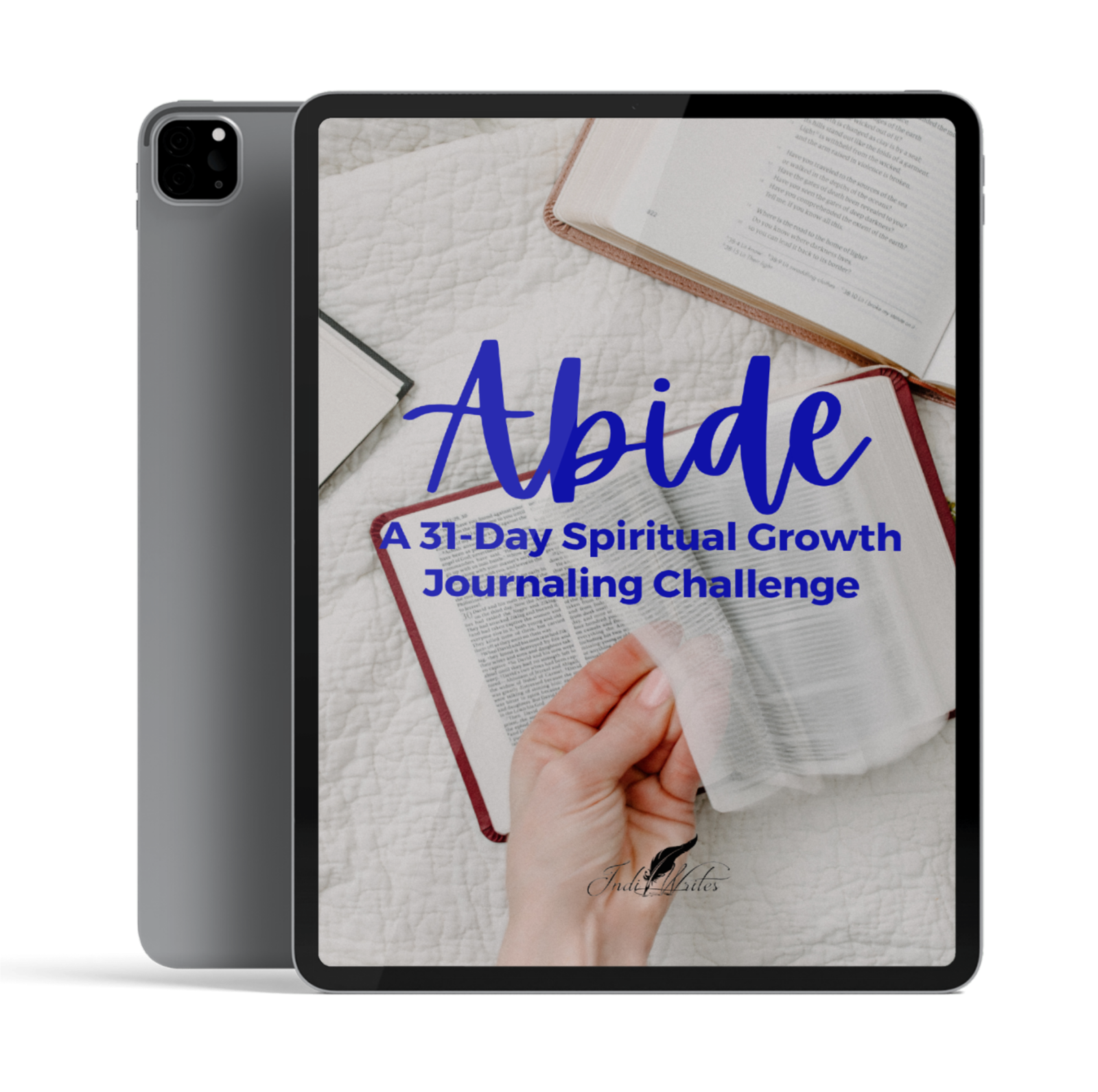
If you want a structured starting point, the Abide 31-day spiritual growth journaling challenge gives you a daily topic, a passage, and a prompt so you never have to decide what to do next.
What to Ignore When Choosing Spiritual Growth Tools
Ignore anything that promises a timeline for your healing. Growth is not linear, and no resource can promise how many days it will take for grief to lift or anxiety to settle.
Three more things to skip:
- Tools that require you to be "spiritually mature enough" to start
- Resources that treat singleness as a problem to be solved
- Journals so pretty you are afraid to write in them
Watch out: any resource that positions itself as a replacement for therapy or professional care. A journal is a companion to healing, not a clinical treatment. If you are in a dark place with anxiety or grief, use these tools alongside real support, not instead of it.
Choosing the Right Journal for Your Season
Choosing the right journal comes down to one question: what is your actual season right now? Not the season you wish you were in.
- Grieving or emotionally exhausted: Wellness 365 covers grief, emotional healing, and releasing shame across 365 days of prompts.
- Struggling with loneliness: Enough is a 31-day challenge built specifically around overcoming isolation.
- Feeling called but hesitant: Chosen walks through identity, accountability, resilience, and self-care using Esther's story.
- Anxious and craving peace: Peace Be Unto You is a 30-day guided journal on pursuing and protecting peace.
- Wrestling with control: Abba: A Trust Journal is a 30-day devotional on surrender and trusting God's timing.
- Wanting to grow in character: Bearing Fruit works through the fruits of the Spirit over 31 days.
You can browse the full spiritual growth and discipleship collection to match a journal to where you are.
The hardest part of any single season is not finding information. It is staying consistent when no one is checking on you. IndiWrites builds guided journals with structured pathways rather than blank pages, prompts rooted in scripture, and practical frameworks that move you from reflection to action. Start with a journal that fits your season, and give your faith one honest page a day.
Frequently Asked Questions
What are the main spiritual growth tools for single women?
The core tools are guided journals with scripture-based prompts, structured Bible study, devotionals written for the single season, and consistent prayer practices. Each one targets a different part of growth: journaling helps you process what you are feeling, Bible study builds what you know, devotionals set your focus for the day, and prayer keeps the relationship active. Most women do best starting with one tool and adding a second once the first becomes a habit.
How can Christian journaling prompts for personal growth help if I've never stuck with journaling before?
Blank pages fail most people because the first question is always what do I write. Guided prompts remove that decision. A structured journal gives you a scripture, a topic, and a question each day, so you open it and start writing within a minute. The Abide challenge, for example, walks you through reading the passage, comparing translations, defining key verbs, and then answering a prompt, which turns journaling into a repeatable routine rather than a blank-page test of willpower.
What is a good devotional for single women who are not preparing for marriage?
Look for devotionals that treat singleness as a full life rather than a waiting room. Saved, Single & Frustrated addresses loneliness, self-worth, and frustration directly, and Stop Asking Why Are You Single focuses on contentment and identity in Christ instead of dating timelines. Both are grounded in the author's own experience as a single woman, and their reflection questions focus on contentment and identity rather than assuming marriage is the goal.
How do I build a consistent prayer habit as a single Christian woman?
Attach prayer to something you already do daily, such as your first cup of coffee or the walk to your car, and give it a fixed shape. A journal like Abba structures 30 days of devotionals, guided prayers, and writing prompts around trusting God with uncertainty, which gives your prayer time a starting point each morning. Two or three sentences of honest prayer done every day beats a long prayer you only manage once a week.
Is a guided journal a replacement for therapy if I'm dealing with anxiety or grief?
No, and no journal should claim to be. A guided journal is a reflection tool that helps you process scripture, name what you are feeling, and build daily habits. Therapy addresses clinical anxiety and trauma with a trained professional. Many women use both: the journal keeps them grounded between sessions and gives them language for what they bring to counseling. If you are in a dark place right now, start with professional support and add journaling alongside it.
